Leading Technology Reputation First Leading Technology Reputation First
The technology leader in the credibility of the supremacy The technology leader in the credibility of the supremacy
Engaged in wear parts for twenty years Provide you with superior products and services Engaged in the manufacture of wear parts for twenty years, Provide you with superior products and value-added services

Why Choose Us ? -- Red Apple Casting Why Choose Us ?
We Have 20 Years Casting Experience.
We Will Supply You High Quality Hammers With Best Price.
We Have 20 Years Casting Experience.We Will Supply You High Quality Hammers With Best Price.
Mexico Client Agent of Latvian
Red Apple Casting (Zhangjiakou Red Apple Machinery Equipment Manufacturing Co., Ltd.) specializes in manufacturing wear-resistant castings for mining machinery, including crusher hammers, blow bars, jaw plates, cone crusher bowl liners (concaves) and mantles, and ball mill liners. Below is a comprehensive guide to the questions most frequently asked by our global B2B clients regarding part compatibility, material selection, custom casting, quality inspection, and delivery.
This is procurement guidance; approved drawings and technical agreements govern each order.
Jaw plates · Hammers · Bowl liners · Mantles · Ball mill liners
| Category | Key Topics Covered |
|---|---|
| Product & Compatibility | Applicable equipment types, models, and OEM part numbers |
| Material & Working Conditions | How to choose between High Manganese Steel, High-Chrome Cast Iron, Alloy Steel, and Bimetallic Composites |
| Customization & Quotation | Custom casting from drawings/samples, non-standard parts, and information required for quotation |
| Production & Quality Control | Casting processes, heat treatment, hardness testing, UT/MT NDT, and inspection certificates |
| Operation & Replacement | Wear limit evaluation, premature breakage, spalling, uneven wear, and service life optimization |
| Procurement & Delivery | Lead times, packaging, shipping logistics, and international export cooperation |
Red Apple Casting primarily manufactures crusher hammers, impact crusher blow bars and impact plates, jaw crusher jaw plates (fixed and movable), cheek plates, and toggle plates, cone crusher bowl liners (concaves) and mantles, ball mill liners and grate plates, high-chrome toothed roller shells, slurry pump wear parts, and other custom wear-resistant castings. We can verify specifications and arrange production based on equipment models, technical drawings, part numbers, or physical samples.
Our wear-resistant castings are widely used in hammer crushers, impact crushers, vertical shaft impact (VSI) sand makers, jaw crushers, spring/hydraulic/multi-cylinder cone crushers, ball mills, toothed roller crushers, and related mining and aggregate processing equipment.
To confirm exact compatibility, we recommend providing the equipment brand, model, part name, OEM part number, key dimensions, technical drawings, or photos of the worn part.
Yes, we provide full OEM/ODM custom casting for both standard and non-standard wear parts. Clients can provide CAD drawings, PDF drawings, part numbers, physical samples, or photos of existing parts. Our engineering team will confirm the casting and machining plan based on dimensions, mounting interfaces, load conditions, and actual site operating parameters.
Crusher hammer material selection depends on feed material hardness, silica/abrasiveness content, moisture level, maximum feed size, impact force, rotor speed, and target output capacity.
Common materials include high manganese steel, high-chrome cast iron, alloy steel, and bimetallic liquid-liquid composite materials (high-chrome working head ≥HRC62 fused with a tough low-alloy steel handle). Each material offers a distinct balance of hardness, impact toughness, and abrasion resistance tailored to specific operating conditions.
High manganese steel (such as ZGMn13Cr2 and ZGMn18Cr2) features superior toughness and impact resistance; under heavy impact loads after water toughening treatment, its surface work-hardens from ~HB200 to over HB450, making it ideal for large feed sizes and severe impact conditions.
High-chrome cast iron (such as Cr20, Cr25, Cr26, Cr27) offers high initial hardness (HRC58–65) and exceptional abrasion resistance, making it suitable for highly abrasive materials with moderate-to-low impact, or for bimetallic composite casting paired with a tough steel backing.
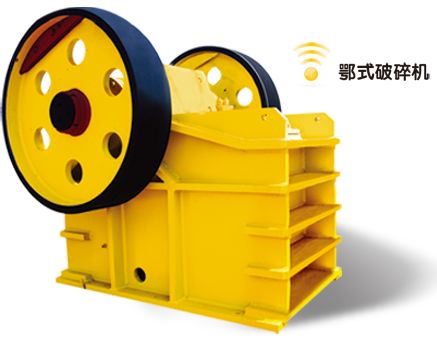
Jaw plate material selection depends primarily on rock/ore type, compressive strength, feed size, reduction ratio, throughput requirements, and existing wear patterns.
Common grades include ZGMn13, ZGMn18, ZGMn18Cr2, ZGMn22Cr2, and ceramic-reinforced composite materials. Clients can share fixed and movable jaw plate dimensions, drawings, and photos of worn plates so our engineers can recommend the optimal manganese-chrome grade and tooth profile.
When selecting cone crusher liners, please confirm the crusher brand, model, chamber type (coarse, medium, fine, standard, or short-head), feed gradation, closed-side setting (CSS), and ore hardness.
Different chamber profiles directly affect throughput, product gradation, and liner wear distribution. Providing the crusher nameplate, OEM part number, technical drawing, or worn liner dimensions ensures accurate selection.
When customizing ball mill liners (shell liners, end liners, or grate plates), we recommend providing:
Because impact and abrasion conditions vary across different mill chambers, our engineers tailor both the alloy grade and wave/step profile accordingly.
Inspect your wear parts and plan replacement when any of the following conditions occur:
Replacement schedules should always prioritize equipment safety and prevent damage to the crusher frame or rotor body.
Premature breakage can be related to material grade selection, casting soundness, heat treatment execution, installation seating, or abnormal operating conditions.
Common field causes include mismatch between material toughness and impact load, uneven seating/bolting stress, uncrushable tramp iron entering the chamber, oversized feed blocks, improper discharge gap settings, or running parts beyond their wear limit. Providing fracture surface photos, operating hours, feed material details, and crusher settings allows our metallurgists to diagnose the root cause.
Uneven or localized wear is typically caused by off-center or segregated feeding, equipment foundation misalignment, improper liner backing/seating, uneven crushing chamber stress, inappropriate discharge setting, or fluctuations in feed moisture and fines content.
When installing new wear parts, we recommend checking feed distribution and alignment simultaneously to maximize liner utilization and lifespan.
For fast technical verification and accurate pricing, please include:
The more complete the information provided, the faster and more precise our engineering quotation will be.
Lead time depends on casting complexity, unit weight, alloy grade, existing pattern/mold availability, order quantity, and production scheduling.
We maintain a standing inventory of over 500 tons of standard wear parts and patterns for rapid dispatch. First-time custom non-standard castings go through drawing confirmation, process simulation, pattern making, melting & pouring, heat treatment, machining, and NDT inspection. Exact delivery dates are confirmed during order review.
Yes. Based on product specifications and contract requirements, we provide quality inspection documentation covering chemical composition (tested via imported direct-reading spectrometer), Rockwell/Brinell hardness, dimensional checks, and visual inspection.
If your project requires metallographic structure reports, Ultrasonic Testing (UT), Magnetic Particle Testing (MT), Penetrant Testing (PT), or dynamic balancing records, please specify these requirements during inquiry or order confirmation.
Yes, we actively support overseas orders. Wear-resistant castings manufactured by Red Apple Casting have been exported to the United States, Japan, Malaysia, Mexico, Latvia, and other international markets through our authorized distribution partners.
We handle custom manufacturing, strict quality inspection, and seaworthy export packaging, and provide complete packing lists, dimensions, and weight documentation in coordination with export partners.
No. Check part number, revision, mounting interface, tolerances and site modifications. Third-party brands and model references identify compatibility and do not imply OEM authorization.
Provide machine model, part number, material and batch, installation date, operating hours, feed and discharge size, material hardness and moisture, and photos of wear locations. Life comparisons require comparable duty and recorded hours or throughput for both parts.
No. Magnetic particle testing applies to surface and near-surface flaws in ferromagnetic materials. Ultrasonic inspectability depends on microstructure, geometry and surface condition. Agree applicable standards, method, coverage, acceptance level and reports before ordering.

 CN